
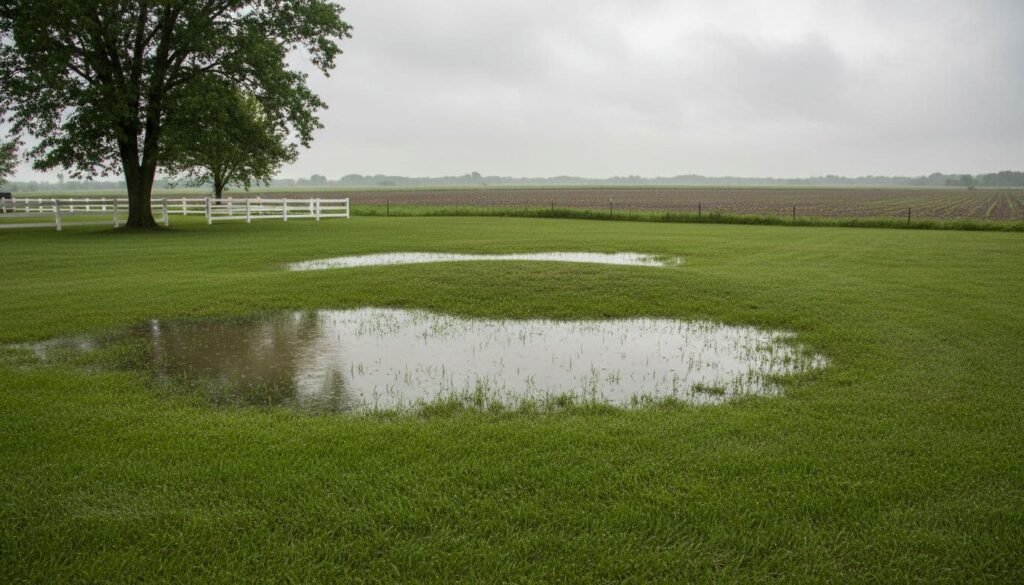
If your yard stays soggy when it hasn’t rained, or your drains slow down for no clear reason, your system might be sending you early hints. In Omaha, those hints can show up faster because septic drain field failure is more likely when the soil won’t absorb water well.
Clay soil acts like a tight sponge. It holds moisture, swells when wet, and seals up when compacted. A drain field can still work in clay, but it needs breathing room, steady use, and good surface drainage. When any of those slip, symptoms start stacking up.
How Omaha clay soil stresses a drain field
A drain field treats wastewater by letting it spread out and soak into the soil. In sandy soil, water moves down and out with less resistance. In heavy clay, water moves slowly and can “stack up” in the trenches.
A few clay-specific issues make trouble more common:
- Slow percolation: Clay has tiny pore spaces, so effluent can’t soak in fast.
- Swelling and shrinking: Wet clay expands and dry clay contracts, which can stress pipes and disturb trench structure.
- Freeze and thaw: Winter freeze can lock up moisture, then thaw can release a rush of water into already saturated soil.
- Compaction sensitivity: Clay loses what little pore space it has when compressed, so the field takes longer to recover after stress.
If you want a plain-language overview of why systems fail, Oregon State University Extension has a strong primer on why septic systems fail.
The most common signs you’ll see (and smell)
Drain field problems often look like “yard drainage” issues at first. The key difference is timing and pattern. If wet spots appear even during dry weather, or return in the same area, pay attention.
Yard symptoms that point to drain field trouble
You may notice:
- Soft, spongy ground over part of the field
- Standing water or light ponding that doesn’t match nearby lawns
- Extra-green grass in strips or rectangles (the field layout “prints” through the lawn)
- Sewage odor outdoors near the field or tank area
Indoor symptoms that often show up early
Inside the house, early signs can include:
- Slow drains in more than one fixture
- Gurgling in toilets or drains after a big water use
- Occasional backup in the lowest drain (basement shower, floor drain)
One slow sink doesn’t prove a drain field issue. Several slow fixtures at once is a different story.
Quick symptom-to-likely-cause table
| What you notice | Likely cause | Why clay makes it worse |
|---|---|---|
| Soggy strip of yard over field | Trenches staying saturated | Clay won’t accept water fast, saturation lasts longer |
| Bright green bands of grass | Effluent near surface | Slow absorption keeps nutrients close to the topsoil |
| Sewage smell near drain field | Effluent surfacing or venting poorly | Saturated clay traps odor and pushes it upward |
| Multiple slow drains indoors | Hydraulic overloading or field restriction | The field can’t “take” flow, so the system backs up |
| Backup after heavy rain | Rainwater inflow or high seasonal moisture | Clay holds stormwater, leaving no storage for effluent |
| Problem started after parking or construction | Soil compaction or crushed lines | Compacted clay loses pore space, pipes can deform |
What’s happening underground during septic drain field failure
Most drain fields don’t fail overnight. They choke down little by little.
Here’s what usually drives it in clay-heavy yards:
Biomat buildup: A natural slime layer forms where effluent meets soil. In a healthy system, it’s thin and stable. In clay, it can thicken faster, reducing absorption even more.
Hydraulic overloading: This is a fancy way to say “too much water, too fast.” Long showers, back-to-back laundry, guests for the weekend, or a running toilet can push the field beyond what it can absorb.
Root intrusion: Roots follow moisture. If trees or large shrubs are close, roots can enter perforated lines or the distribution box, then catch solids and paper.
Compaction and crushed trenches: Driving, storing materials, or even repeated mowing with heavy equipment over a wet field can compress the soil and damage pipes.
Poor grading and surface water: If roof runoff or a sump pump discharges uphill of the field, the soil stays wet before septic effluent even arrives. In clay, that “pre-saturation” is a big deal.
Seasonal triggers Omaha homeowners should watch
Omaha’s weather swings add pressure at predictable times.
Late winter thaws: Snowmelt soaks the top layer, then a refreeze can trap moisture. When it thaws again, water moves into trenches quickly.
Spring rain: Clay becomes heavy and sealed. A field that seemed fine in February can show wet spots in April.
Summer storm cycles: Dry clay can crack, then sudden storms fill those cracks and saturate the area fast. If the field is already stressed, symptoms pop back up.
Fall yard work: This is when people regrade, add soil, plant trees, or run equipment. Those changes can set up next spring’s failure.
What to do if you spot warning signs
Start with calm, simple steps that reduce pressure on the system:
Cut water use for a day or two: Spread laundry out, shorten showers, fix any running toilet. If symptoms improve fast, overloading is part of the problem.
Keep traffic off the drain field: No parking, no dumpsters, no skid steers. If it’s wet, stay off it entirely.
Check where water goes outside: Make sure downspouts don’t dump near the field, and don’t send sump pump discharge toward it.
Schedule a professional evaluation: A good inspection looks at tank levels, baffles, the distribution box, and signs of saturated trenches. If you need targeted help, see our page on Omaha drain field repair and replacement, and the approach to troubleshooting.
If your tank hasn’t been pumped or serviced in years, that’s a major risk factor. Regular pumping helps keep solids from reaching the field. So, we recommend getting your tank pumped as soon as possible if it hasn’t been pumped in at least the past 5 years.
Practical prevention for clay-soil drain fields
A clay-soil drain field does best with consistency, not big swings.
- Use water in smaller bursts: Don’t run multiple loads of laundry back-to-back.
- Fix leaks fast: A silent toilet leak can overload a field for weeks.
- Pump on the right interval: Many homes land in the 2 to 5-year range, but tank size and household use matter.
- Route roof runoff away: Extend downspouts so they discharge well away from the field area.
- Protect the field from weight: Avoid parking, building patios, or placing sheds over trenches.
- Manage roots: Keep large trees a safe distance from the field and distribution box.
- Don’t add fill without advice: Raising grade over a field can reduce oxygen and change how water moves.
For a homeowner-friendly take on why clay complicates septic performance, this article on having a septic tank in clay soil explains the basic challenge in plain terms.
Don’t Delay Service
Clay soil doesn’t mean your system is doomed, but it does mean small problems show up louder and sooner. If you catch septic drain field failure early, you often have more options and less damage to the yard. Reduce water load, keep surface water away, and stop traffic over the field while you get it checked. For diagnosis and any repair permits, contact your local health department and a licensed septic contractor who works in the Omaha area.